CASE STUDY > Too hot in summer


This home is a 2 bedroom, almost free standing villa.

Construction is brick veneer on a concrete slab. Roofing is constructed of timber trusses with concrete tiles. There are no eaves.

External brick veneer walls have been fitted with laminated foil wrap which appears to be well fitted.

The windows are aluminium framed single glazed with sliding sashes.

This home was very hot in summer. The owner wanted to reduce energy consumption and become more sustainable.


Four areas were addressed to improve the thermal performance of this home and provide for a sustainable future:


1. Draught Proofing. The front door and the internal garage door are timber rebated, internal opening doors; neither of which had any draught exclusion or weather stripping. The utility room doors were not draught proofed. Ceiling mounted exhaust fans were unsealed.

2. Heavy Drapes and Pelmets. A range of blinds and curtains were fitted to the windows with heavy drapes in the lounge and master bedroom only.

3. Ceiling Insulation, Roof Ventilation. The ceiling was insulated with pumped in granulated rock wool insulated to a level on average of R2.5. Migration of loose fill insulation occurs over time. The insulation had started migrating from the centre area of the ceiling out towards the edges. Insulation is particularly thick over the bathroom and laundry areas.

The roof pitch is low and roof tiles secured over the attic space are quite restrictive and without ventilation. This makes it prone to significant heat build up during hot days and slow heat dissipation in the evenings due to the thermal mass of the roof tiles.

4. Window Glazing. All windows are aluminium framed, with sliding sashes. While they are all in excellent condition, the aluminium frame provides an excellent path of bidirectional thermal conduction. Likewise single glazing provides very little thermal resistance.

The following solutions were implemented:

1. Draught Proofing. This home only required some minor draught proofing to bring it up to a very good standard.

The front door and internal door to the garage were draught proofed and weather seals were fitted using architectural quality weather seals and bottom of door draught excluders.

Brush style draught excluders were fitted to the bottom of internal doors to the laundry, bathroom and toilet.

Automatic exhaust fan seals were fitted to the exhaust fans in the bathroom and toilet.

Gaps were sealed around the front door frame and architraves.

2. Heavy Drapes and Pelmets. Heavy drapes and pelmets can make a large difference both for winter and summer comfort in a home. When the curtains are drawn, they improve the performance of single glazed windows by about the same amount as double glazing.

By adding pelmets to the lounge and master bedroom as well as adding heavy drapes and pelmets to the second bedroom and living area windows, the thermal performance of this home improved significantly.

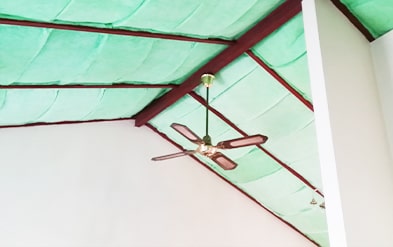
3. Ceiling Insulation, Roof Ventilation. The ceiling was already partially fitted with foil batts.

The solution was to add a reflective style of insulation and lay it over the bulk insulation. This is an effective way to improve the summer performance of the ceiling. In order to gain the maximum benefit from this, it was necessary to completely cover the ceiling with foil batts.

Further benefit was to be had by ventilating the attic space with the use of a thermostatically controlled powered roof ventilator. This reduces the daytime heat buildup as well as assisting the dissipation of heat in the evenings.

The owner is in the process of growing a deciduous vine for the purpose of providing summer shading to the second bedroom window which will have a similar effect to an external adjustable blind.

4. Window Glazing. The performance of single glazed aluminium framed windows can be greatly improved by adding a secondary glazing treatment. Secondary glazing is the process of adding components to the existing windows and glazed doors in order to provide the benefits of double glazing, but without the expense.

Alternatively, replacement of glazing with uPVC or timber framed double glazing would be the most effective option, it is also the highest cost option, with the highest waste of material and the highest proportion of disruption to the householder.

It is only necessary to treat the living and bedroom windows to achieve a 6 star rating in this home.


Contact ecoMaster to help you find the right solution for your home.


Find out how we can help you

Call 1300 326 627 or email ecoMaster


   ,Website by KMD Enterprises & ojo online © ecoMaster 2008. All rights reserved.