


Some doors have a tiny little design flaw that does not seem like a problem until you try to make the door better.
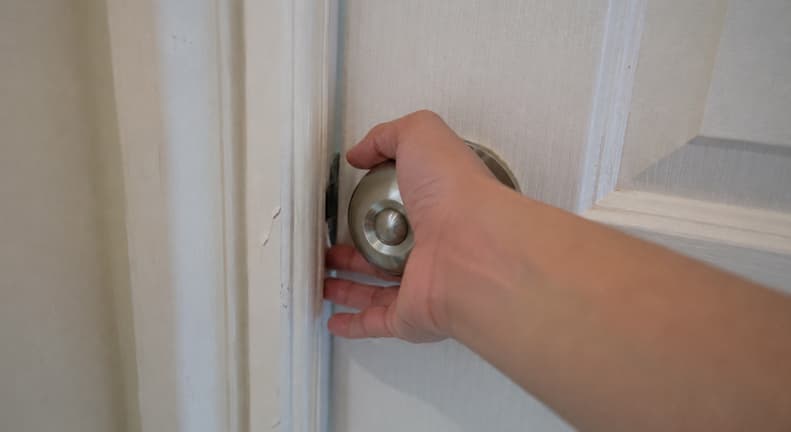
The door knob is too close to the door jamb.
At first, this sounds minor. Almost boring. Certainly not the sort of thing anyone expects to have feelings about.
But then you install a lovely Draught Dodger to stop the weather barging into your home, reach for the knob, and suddenly your knuckles meet the new door seal in a way no one enjoyed.
Congratulations. You have discovered the knuckle collision zone. Not technically a renovation term. But it should be.
Draught Dodgers are designed to sit neatly on the door jamb and seal the gap around the door. That is the whole point. It goes where the draught is, which is usually exactly where the door closes against the frame. On most doors, this works beautifully. The seal does its job, the door still closes, the weather stops wandering in like it owns the place, and everyone is happier.
But some door knobs sit very close to the edge of the door. And when the knob is too close to the jamb, there may not be enough space for your knuckles once the Draught Dodgers are installed.
The Draught Dodger is not being rude. It is just standing where it has been told to stand. The door knob, however, has been suspicious from the beginning. 😏
Door knobs are not exactly the pinnacle of user-friendly design. They require gripping, twisting, wrist movement and a level of cooperation that becomes even more annoying when your hands are full. They are particularly unhelpful if you are carrying shopping, laundry, a child, a laptop, a basket of washing, or three things you should absolutely have carried in two trips.
And if the knob is sitting too close to the door jamb, it adds another problem. Your fingers need to fit between the knob and the frame. If there is not much room there to begin with, adding a proper perimeter seal can turn a mild inconvenience into a daily knuckle argument.
There are two ways to deal with this.
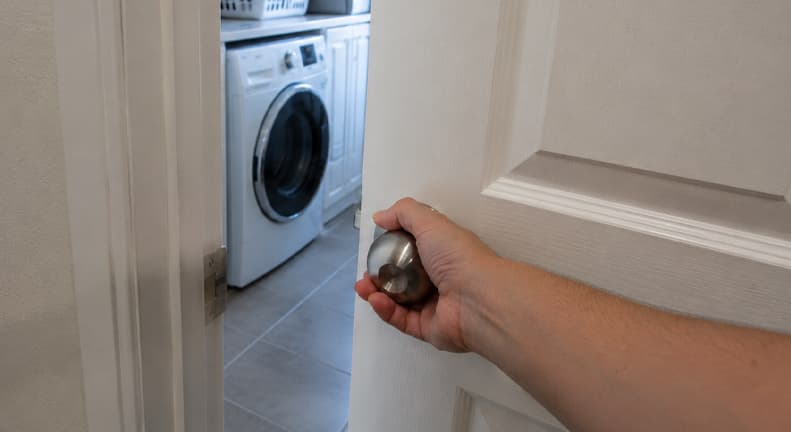
Option 1 - Tailor Your Draught Dodgers
The first option is to install the Draught Dodger with a small break around the door knob area. Instead of running the moulding in one continuous length past the knob, you cut the Draught Dodger slightly above and below the knob. The ends can be cut on an angle so your hand has more room to move and your knuckles do not crash into the seal every time you open the door.
On timber draught dodgers, this looks fine. The draught dodger edges can be sanded to smooth the look and feel. On aluminium draught dodgers, it is not as aesthetically pleasing, but you can certainly apply products to seal the internal core of the aluminium moulding.
This is the practical workaround. It lets you seal most of the door jamb properly while creating a little hand-clearance zone around the knob.
It is not quite as elegant as having one continuous length, and it does mean you are working around the problem rather than removing it. But in many cases, it is a perfectly reasonable solution, especially if you are not ready to change the door hardware.
Option 2 - Replace Door Knob with a Door Handle
The better option, though, is to replace the door knob with a lever handle.
And honestly, if you have been living with a difficult old door knob for years, this may be the moment the universe has been waiting for.
Lever handles keep your knuckles further away from the edge of the door. Instead of wrapping your hand around a round knob right next to the jamb, your hand sits out on the handle. That gives you more clearance, makes the door easier to open, and avoids the whole awkward knuckle-meets-Draught-Dodger situation.
Also, lever handles are just easier.
You can open them with your hand, when your grip is not brilliant, when you are carrying things. In some cases, you can even open them with your elbow when your hands are full.
Try doing that with a door knob. Actually, don’t. That is how you end up wedged in the doorway holding groceries.
Door knobs have had a good run. They have been in homes for a very long time, looking round and traditional. But from a usability point of view, handles are often much better. They are easier for children, older people, people with limited hand strength, and anyone trying to bring in the shopping without putting everything on the floor.
So if your door knob is too close to the jamb, replacing it with a handle does two useful things at once. It solves the knuckle clearance issue, and it makes the door easier to use every day.
That is a very good outcome from what started as a small door-sealing nuisance.
Before you install your Draught Dodgers, take a moment to check the door hardware. Open and close the door. Put your hand on the knob as you normally would. Look at how much space there is between your knuckles and the door jamb. If your fingers are already brushing the frame, that is your warning sign.
Once the Draught Dodgers are installed, there will be less space. Not because the product is wrong, but because the seal needs to sit where the gap is. If the knob is already living too close to the edge, the new seal may make that tight space more obvious.
This is one of those little checks that can save a lot of annoyance later.
It is also a reminder that draught proofing is not just about sticking something on a door and hoping for the best. Real doors are not always square. Real frames are not always even. Real door hardware is not always conveniently placed. And real knuckles, quite reasonably, prefer not to be smashed into timber or aluminium on a daily basis.
So if your door knob is too close to the jamb, don’t panic. You have options.
You can create a neat angled break in the Draught Dodger around the knob so your hand has room to move. Or, better still, you can take the opportunity to replace the knob with a proper lever handle and make the door easier to use forever.
Either way, the goal is the same. Seal the door properly. Keep the weather out. And let your knuckles live in peace.
People Also Ask:
⇒ Where can I learn more about this from an industry expert?
ecoMaster has been working in the energy efficiency/retrofit arena for over 20 years. During that time, we learned an enormous amount about diagnosing issues, distinctions on various products, as well as developing the best installation practices. We have done the research, so you don't have to. All that information has now been condensed into a series of ecoMasterClasses. Click here to gain access.
⇒ Can I install a Draught Dodger if my door knob is close to the door jamb?
Yes, but you need to check the clearance first. If your knuckles already sit very close to the door jamb when you turn the knob, the Draught Dodger may reduce that space further. In that case, you can either cut the Draught Dodger around the knob area or replace the knob with a lever handle.
⇒ Why would a door knob cause a problem with a door seal?
Some round door knobs are installed very close to the edge of the door. When you add a perimeter seal to the jamb, there may be less room for your fingers between the knob and the seal. This can create a knuckle collision point when opening or closing the door.
⇒ How do I cut a Draught Dodger around a door knob?
If the knob is too close to the jamb, the Draught Dodger can be cut slightly above and below the knob area. Angled cuts help create a smoother hand-clearance zone so your knuckles do not hit the seal as you use the door.
⇒ Is it better to replace a door knob with a lever handle?
Often, yes. A lever handle keeps your hand further away from the door edge, which helps avoid the knuckle clearance problem. Lever handles are also generally easier to use, especially when your hands are full or when twisting a round knob is difficult.
⇒ Should I check door hardware before buying a door seal?
Yes. Before buying or installing a door seal, check the gap around the door, the way the door closes, and the position of the handle or knob. These small details can affect which sealing method will work best.
If you found this article helpful, then please subscribe to our YouTube Channel. You’ll find many more helpful “How To” videos there. You can also follow us on Facebook and Instagram to stay in the loop. For more great information on how to make your home more energy and thermally efficient subscribe NOW to ecoBites. ecoBites are free bite size chunks of the latest energy efficiency information making it quick and easy for you to absorb.
What’s Next?
We hope this article has helped you spot one of the more annoying little door-sealing traps before your knuckles discover it the hard way.
Next, explore How to Measure Your Door Gaps Before Buying a Door Seal.
If you found this article helpful, then please subscribe to our YouTube Channel. You’ll find many more helpful “How To” videos there. You can also follow us on Facebook and Instagram to stay in the loop. For more great information on how to make your home more energy and thermally efficient, subscribe NOW to ecoBites. ecoBites are free bite-size chunks of the latest energy efficiency information, making it quick and easy for you to absorb.
Recent Comments