


Seal the top, bottom and latch side - without stopping the door from sliding.
Aluminium sliding doors are wonderfully common. They are also wonderfully draughty once the original seals wear down, flatten, shrink or fall apart.
You may feel cold air at the bottom of the door, along the top track, or where the sliding door closes against the latch side. You may also hear rattling, whistling or the faint sound of your heating bill racking up.
That is where the EMV Slim Line Seal comes in. EMV is a low-profile, self-adhesive V seal that helps close draughty gaps at the bottom, top and latch side of aluminium sliding doors - without stopping the door from sliding.
It is not bulky or complicated. It is a neat, practical way to improve the parts of the door we can reliably seal.
Be clear, it is not a sliding door repair. If you door doesn’t slide smoothly now, EMV is not going to fix that.
A note about the trailing edge
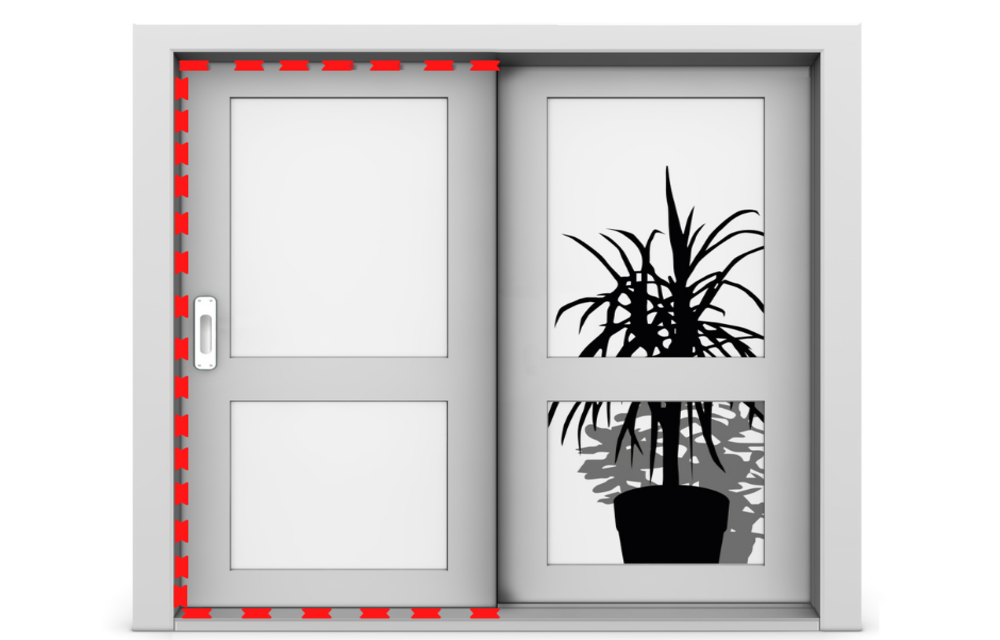
We need to be clear about this bit. EMV is used on the bottom, top and latch side of the aluminium sliding door.
We do not provide a standard solution for the trailing edge of the door. That is the back edge of the sliding panel - the side that overlaps with, disappears behind, or meets the fixed panel depending on the door design.
There are simply too many variations in aluminium sliding door systems to offer one reliable, standard DIY fix for that edge.
Some doors overlap differently, have existing interlocks or worn brushes. Some have weird little arrangements clearly designed by someone who never intended us to draught proof them later.
So we focus on the areas where EMV can be installed consistently and usefully: bottom, top and latch side. That still gives you three very worthwhile draught paths to improve.
Why this matters
A draughty aluminium sliding door can make a room feel colder in winter, hotter in summer and harder to keep comfortable. The gaps may look small, but air does not need much encouragement. It can leak through the bottom track, along the top, or down the latch side where the sliding panel closes.
Once that happens, your heater or air conditioner has to keep replacing comfort that is sneaking out. Sealing these gaps helps reduce draughts, rattling, dust and insects - and makes the door behave a little better.
Is this the right DIY project?
This project is for aluminium sliding doors that are still in use.
Use EMV if:
- your aluminium sliding door is draughty
- the original brush seals are worn, flattened or missing
- you can feel air along the bottom of the door
- you can feel air along the top of the door
- you can feel air on the latch side
- the door rattles in the frame
- you need the door to keep sliding properly after sealing
Do not use EMV to fix:
- damaged rollers
- bent tracks
- doors that do not slide properly
- large structural gaps
- a door that needs repair before draught proofing
- the trailing edge where the sliding panel overlaps the fixed panel
If the door is already dragging, scraping, jamming or leaning sadly in the track, fix that first. EMV seals draughts. Whilst we love EMV, it does not perform sliding door miracles.
What you will need
- EMV Slim Line Seal
- Measuring tape
- Scissors or sharp blade
- Clean cloth
- Mild cleaner
- Dry cloth
- Vacuum, if the track is full of grit and old-door archaeology
Optional:
- Isopropyl alcohol for final cleaning, if suitable for your door surface
- A helper, if the door is large
- Patience, especially for cleaning the bottom track
The DIY process
If you are a Watcher, watch the installation video first.
If you are a Reader, here are the steps.
Best result? Do both - set yourself up for success.
1. Find the draught
Before applying anything, work out where the air is leaking.
Check:
- the bottom of the sliding door
- the top of the sliding door
- the latch side where the door closes
- any rattling or movement when the door is shut
Use the back of your hand to feel for air movement. We can’t address the trailing edge of your door for this project. There are too many door variations for a standard EMV fix there.
2. Clean the surface properly
This is the boring step. It is also the step that decides whether the seal stays stuck. Clean the aluminium where the EMV will be applied. Remove dust, grit, grease and old adhesive.
Dry it thoroughly. Self-adhesive seals do not like dirt or moisture. If you skip this step, the EMV may peel off later and lie on the floor looking defeated.
3. Measure the bottom edge
Measure the length of the bottom section you want to seal. Cut the EMV a little bit longer than you think you need. Do not stretch it while measuring or applying. Let it sit naturally.
4. Fold and apply the EMV to the bottom
EMV is a V-profile seal. Fold it so the V shape is ready to compress gently when the door is closed or moving. Peel back a small section of the backing tape and begin applying the seal. Do not remove the whole backing. That just makes it hard on yourself for no reason. Press the adhesive firmly into place as you go.
5. Measure and seal the top edge
Repeat the same process along the top of the sliding door. Clean. Measure. Cut. Fold. Apply carefully. The top edge can be an important draught path, especially when the original seals have worn down. Again, check that the door still moves freely once the seal is in place.
6. Seal the latch side
The latch side is the vertical side where the sliding door closes into the frame. This is often a very useful place to apply EMV because it can help reduce draughts and rattling when the door is closed. Clean the surface carefully, measure the vertical length, cut and fold the EMV and apply it so the V compresses when the door closes.
Do not make it so tight that the door struggles to latch. A good seal should improve the door - not start a daily argument.
7. Test the door
Slide the door open and closed.
Check that:
- the door still slides properly
- the door still latches
- the EMV is not catching
- the seal is not being pulled off
- rattling has reduced
- draughts have improved at the bottom, top and latch side
If the door feels too tight, stop and check the seal position.
What about the trailing edge?
This is the edge we are not sealing with this DIY method. The trailing edge is the back edge of the sliding panel - the side that overlaps with, passes behind or meets the fixed panel.
In theory, it is another possible draught path. In practice, aluminium sliding doors vary too much for us to provide one standard DIY solution that works neatly across the board.
There may be interlocks, brushes, different overlaps, different clearances, or frame details that make each door different. So for this project, leave the trailing edge alone unless you have had it assessed and know exactly what you are doing. Seal the bottom, top and latch side with EMV. That is the reliable DIY fix.
Common mistakes
Sealing the wrong edge
EMV is for the bottom, top and latch side in this project. Do not assume it will solve the trailing edge.
Not cleaning properly
Adhesive seals need a clean, dry surface. Sliding door tracks are often full of dust and grit. Clean them properly. “I wish I hadn’t clean my door so thoroughly” said no one ever!
Stretching the EMV
Do not stretch the seal while installing.
Making the door too tight
The seal should compress gently. If the door is difficult to slide or latch, check the placement. EMV is suitable for gaps between 2mm and 7mm.
Trying to fix a broken door with draught seal
If the rollers are damaged, the track is bent, or the door is out of alignment, fix that first. EMV is not a substitute for a functioning sliding door.
Recommended product
EMV Slim Line Seal
EMV is a clear, low-profile, self-adhesive V seal for small draughty gaps around aluminium sliding doors and windows.
Use it on aluminium sliding doors for:
- bottom edge draughts
- top edge draughts
- latch side draughts
- minor rattling
- worn or tired original seals
It is a simple DIY option when the door still works properly but the air leakage is getting annoying.
Common questions
Can EMV be used on aluminium sliding doors?
Yes. EMV is suitable for aluminium sliding doors where small draughty gaps are letting air through. For this DIY project, use it on the bottom, top and latch side of the door.
Can EMV seal the trailing edge?
Not as a standard DIY solution. The trailing edge varies too much between aluminium sliding door designs. Some have interlocks, some have brushes, some overlap differently, and some have very little workable space. We do not recommend EMV as a standard trailing-edge fix.
Will EMV stop the door from sliding?
It should not, if installed correctly. Test the door after installation. If it is catching or difficult to slide, check the placement before forcing it.
Will EMV stop rattling?
It can help reduce rattling, especially on the latch side, where the door closes into the frame. If the rattling is caused by damaged rollers, worn tracks or poor alignment, those issues need to be fixed separately.
Can I use EMV on aluminium sliding windows?
Yes, depending on the window type, gap and movement. The same idea applies: the seal must close the gap without stopping the window from operating.
Can renters use EMV?
Yes. Renters should get permission from the rental provider before installing adhesive seals. If the property is in Victoria, draught proofing will be relevant to Minimum Rental Standards, but any work should still be agreed and done safely (and the landlord should be paying for it).
Now What?
Aluminium sliding doors are common draught culprits because the original seals wear out over time.
Not sure if your sliding door is the only leak? Start with Find and Fix My Draughts. Maurice walks you through the house, shows you where draughts hide, and helps you work out what to fix first — before you start buying seals and blaming the wrong gap.
Related Resources
- Draught Proofing Information Hub
- What is Draught Proofing?
- Find and Fix My Draughts
- EMV Slim Line Seal
- How to Draught Seal Aluminium Sliding Windows with EMV
- My Home Is Too Cold
- My Home Is Too Hot
Recent Comments