


Stop your ducted heating from warming the underside of your floorboards. If you have ducted gas heating that comes up through floor registers, this DIY project is for you. We need to be clear - this is:
- Not decommissioned heating vents
- Not “Goodbye Heating Vents”
Many older ducted gas heating systems are basically on or off. They do not always adjust the fan and gas output just because you have closed half the vents. Closing registers that are in use can create extra back pressure in the ducting. That can increase the chance of a duct popping off, splitting or blowing out at a junction under the floor.
SO… this page is for floor heating outlets that are still connected to a working ducted heating system. And that distinction matters. Because if the heating is still in use, you do not block the vent. You seal the gaps around the outlet so the warm air comes into the room instead of disappearing straight back under the floor.
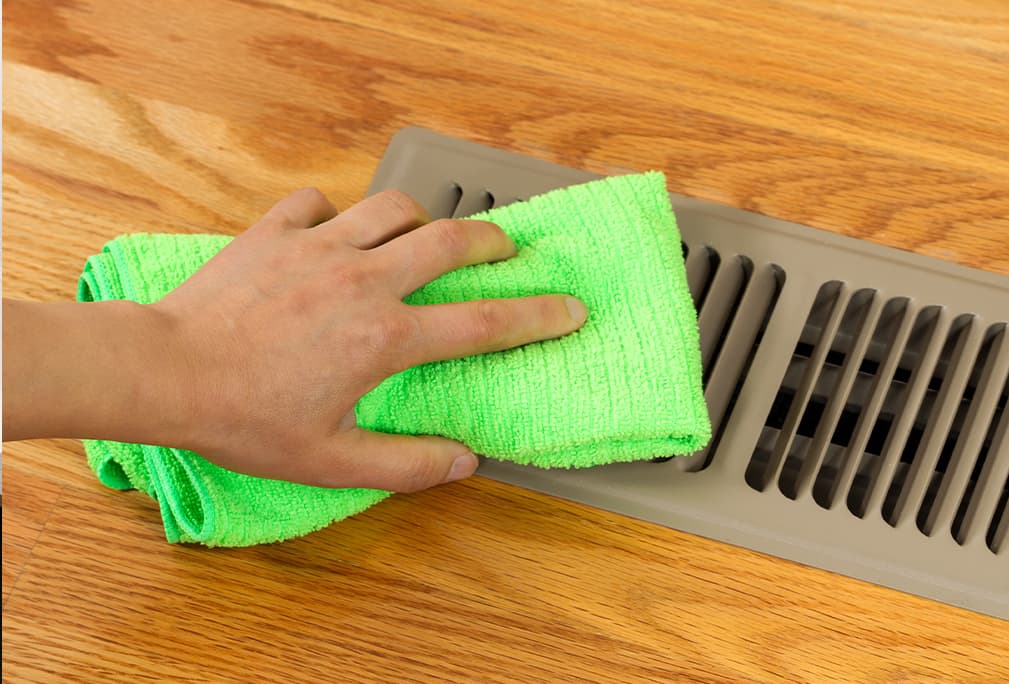
Why This Matters
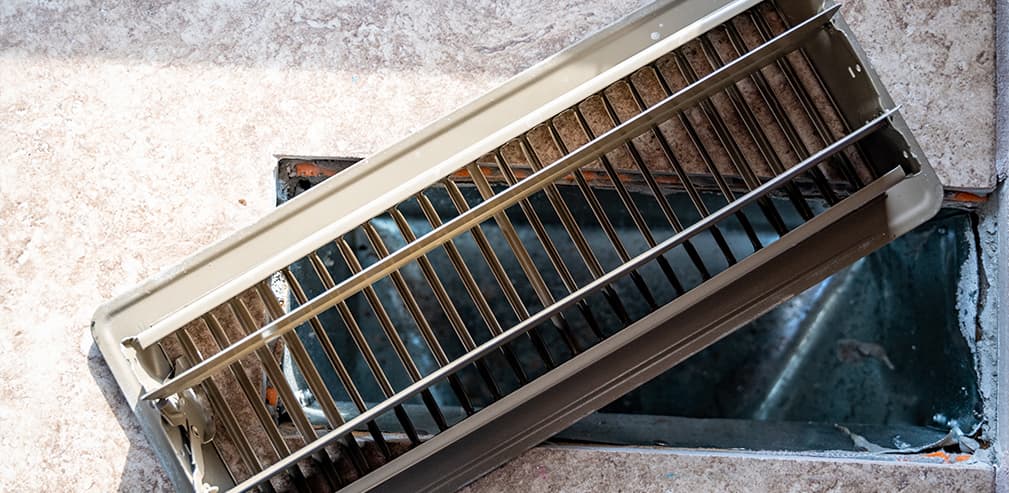
Most floor heating outlets have a duct boot underneath them. That boot adapts the round or flexible ducting into the oblong hole cut into your floorboards. Then the floor register sits on top. That is lovely in theory, but in real houses, the oblong hole may have been cut with enthusiasm rather than precision.
That means gaps can appear between the boot, the floorboards and the register. When the heating is on, some of your warm air can escape through those gaps and go straight back under the floor. Which is less than useful. You paid for warm air in the room, not warm spiders under your house.
Signs This Might Be Happening
Check your floor heating outlets if:
- the register feels loose or rattly
- you can see gaps around the outlet when the register is removed
- the boot underneath is crooked, dropped or not sitting level with the floor
- warm air seems weak from one or more registers
- the room is hard to heat even when the system is running
- there is dust, dirt or cold air can be felt around the register
- one outlet looks dodgy and you suspect the rest of the house may be joining in
If one floor outlet has gaps, there is a fair chance others do too. Old houses like to be consistent with their nonsense.
What You Are Fixing
You are sealing:
- gaps between the duct boot and the floorboards
- gaps around the register frame
- small cracks where warm air can escape sideways
- dropped or loose boots that need to be re-fixed
You are not sealing:
- the open grille
- the duct itself
- the airflow path
- any active heating outlet
The warmed air still needs to come out, into your rooms.
What You Will Need
- UltraClear Invisible Sealant
- Cleaning cloth
- Vacuum or brush
- Torch
- Screwdriver, if your register is screwed down
- Small nails, screws or suitable fixings if the boot has dropped
- Damp cloth for cleanup
- Patience, because floor registers are not glamorous work
Optional:
- Incense stick, tea light or tissue to check air movement
- Gloves
- Knee pads, if your knees have lodged a formal complaint
The DIY process
If you are a Watcher, watch the installation video first.
If you are a Reader, here are the steps.
Best result? Do both - set yourself up for success.
1. Lift off the floor register
Remove the floor register so you can see the duct boot underneath. Some registers lift straight out. Others may be screwed down. Once it is off, look carefully at the shape of the hole in the floorboards and how well the boot lines up with it. Do not be surprised if it looks a bit random. That is often exactly the problem.
2. Look for gaps around the boot
You are looking for gaps where warm air could escape sideways instead of coming up through the register.
Check:
- along the long sides of the oblong opening
- at the short ends
- around the corners
- between the plastic boot and the floorboards
- anywhere the boot does not sit neatly against the floor
If you can see gaps, warm air can probably find them too. Air is annoying like that.
3. Check whether the boot has dropped
Sometimes the boot is meant to sit level with the underside of the floor, but the fixing pins or nails have come loose. When that happens, the boot can hang down under the floor, leaving much larger gaps around the outlet. If the boot has dropped, push it back into position and re-fix it before sealing. Do not just blob sealant over a boot that is hanging out of place. That is not draught proofing and will not fix the problem.
4. Seal the gaps with UltraClear
Once the boot is sitting properly, use UltraClear to seal the gaps around the boot and floor opening. UltraClear is a good choice because it is flexible, water-based, low odour, easy to clean up while wet, applies white and dries clear. Apply a neat bead around the gaps where air could escape. Smooth it while wet. Clean up excess straight away. If the gap is larger than expected, you may need a filler rod first, then UltraClear over the top. Do not try to fill a large gap with one heroic squeeze.
5. Replace the register
Once the sealant has dried enough, replace the floor register. Make sure it sits properly and does not disturb the seal. The register should still open and close as designed, but the gaps around the outlet should now be sealed.
6. Check airflow from every register
Turn the heating on and check that warm air is coming out of all the floor registers. You are not just checking the one you sealed. You are checking the system. If one or more registers have little or no airflow, there may be a duct problem under the floor, such as a disconnected duct, damaged ducting or a blown junction. That is not an UltraClear job.
A Note About Closing Floor Registers
Many floor registers have little internal flaps so you can reduce or close airflow to that outlet. They are tempting. But be careful. Older ducted gas heating systems are often not designed for aggressive zoning. If you close too many registers, pressure can build up in the ductwork and increase the chance of a duct blowout under the floor. A closed register may not fully seal anyway. So if you are trying to improve room comfort, sealing gaps around the outlet is useful. Shutting half the house and hoping the heating system appreciates your strategy may not be.
What about the trailing edge?
This is the edge we are not sealing with this DIY method. The trailing edge is the back edge of the sliding panel - the side that overlaps with, passes behind or meets the fixed panel.
In theory, it is another possible draught path. In practice, aluminium sliding doors vary too much for us to provide one standard DIY solution that works neatly across the board.
There may be interlocks, brushes, different overlaps, different clearances, or frame details that make each door different. So for this project, leave the trailing edge alone unless you have had it assessed and know exactly what you are doing. Seal the bottom, top and latch side with EMV. That is the reliable DIY fix.
Recommended Product
UltraClear Invisible Sealant
Use UltraClear for small gaps around active floor heating outlets. It is ideal for sealing around:
- floor register frames
- duct boots
- floorboard edges
- small gaps around trims and fittings
- other annoying little air leaks
It applies white, dries clear and stays flexible, which makes it much more civilised than trying to wrestle silicone into a neat finish. And it doesn’t smell!
Common Questions
Can I seal a floor heating vent if the heating system is still in use?
You can seal around the outlet. You must not block the vent itself. The heating air still needs to come into the room.
Is this the same as Goodbye Heating Vents?
No. Goodbye Heating Vents is for decommissioned floor vents from heating systems that are no longer in use. If your ducted heating is still active, do not use that method.
What if the boot has dropped under the floor?
Re-fix the boot first, then seal the gaps. If you cannot access or secure it properly, get help. A loose or dropped boot can waste a lot of heat.
What if there is no air coming out of one register?
That may mean there is a disconnected duct, damaged ducting or a blown junction under the floor. Check other registers too. If airflow is missing or very weak, get the ductwork inspected.
Can I close registers to heat only some rooms?
Be careful. Some systems are designed for zoning, but many older ducted gas systems are not. Closing too many registers can create back pressure and may damage ductwork. If in doubt, ask a heating technician.
Can I use silicone instead of UltraClear?
You can, but we would not choose it for this job. Silicone is messier, smellier and less forgiving. UltraClear is easier to work with, cleans up while wet and dries clear.
Should I check every floor outlet?
Yes. If one has gaps, there is a good chance others do too. Once you have the UltraClear out, work through the lot.
Now What?
Once you have sealed around your floor heating vents, it is onto the next draught proofing job! Go back to the Draught Proofing Information Hub and find your next job. Well done!
Recent Comments