



Planning your summer escape to the nearest public air-conditioned space? Hold it right there!
On a hot summer day:
* Is your home unbearably hot?
* Do you find it virtually impossible to sleep?
* Do you settle for band-aid solutions like letting your air-conditioner run non-stop while saying that you’ll “just deal with” the energy bills when they come?
If your home turns into a slow-cooker every time the temperature climbs, it’s usually not “just the weather”. It’s heat getting in (or building up) through a few predictable pathways: air leaks, glass, roof space, floors, and walls. The most common summer complaint we hear is some version of: “It’s hotter inside than outside.”
Here’s the good news: overheating usually comes down to a handful of predictable culprits — and once you tackle them in the right order, your home can feel dramatically calmer (with less reliance on air con).
Without the ‘thermal energy efficiency jargon’, summer heat gets in via three main pathways:
- Sun + radiant heat (especially through glass)
- Heat transfer through building materials (Often points to roof space and/or brick thermal mass.)
- Air leakage (hot air sneaks in, cool air leaks out - classic air leakage)
So let’s make it simple. Here are the five biggest reasons your home is too hot — and the best ways to fix each one.
Quick “60-second heat check” (do this before you spend a cent):
- Do some rooms cook first thing in the morning (east) or late afternoon (west)?
- Can you feel heat coming off the glass even with blinds down?
- Does the house stay hot late into the night?
- Does your air con help… then the room heats right back up once it cycles off?
If you’re nodding along, you’ll get value from this guide — and you may also like our blunt, practical page: My House Is Too Hot.
The best order to fix summer overheating
If you only remember one thing, remember this section:
- Stop sun hitting the glass (external shading is king)
- Seal air leaks (so cooled air stays inside)
- Insulate the ceiling/roof properly (because roof spaces get savage)
- Improve window performance (without necessarily replacing windows)
- Address floors/walls where it stacks up
Now — onto the five reasons.
1. Gaining Hot Air, Losing Cool Air

Does your home quickly become hot again as soon as your air-conditioner thermostat switches off?
That’s often the signature of a leaky home. Draughts are invisible, but they’re basically tiny “open windows” all over your house — and in summer they do two annoying things at once:
- Hot air gets pulled in
- Cool, expensive conditioned air leaks out
Draught is invisible and can be responsible for up to 50 percent of your expensive heating and cooling being lost to outside. This can happen through gaps in doors, windows, architraves, wall vents and more.
What to do about draught: Real Draught Proofing goes beyond door snakes and sticky foam seals. Seek good quality architecturael solutions to properly and permanently seal your home. This will help you to control your home’s ventilation and reduce your air-conditioning bill.
What to do (best next step):
- Start with the biggest, most obvious gaps: external doors, older windows, floorboard gaps, exhaust fan backdrafts.
- Use our Draught Proofing Information Hub to choose the right fix (and avoid “seal everything permanently” mistakes).
If you are seeking additional information on this, check out these articles:
- “Draught proofing hub” → Draught Proofing Information Hub
- “More summer tips” → Preparing Home for Summer (has draught + ventilation guidance)
Common mistake (quick reality check):
The most common mistake is sealing a home without thinking about controlled ventilation. Draught proofing is about stopping uncontrolled leaks, not eliminating fresh air.
We also repeat the warning: do not draught proof a home that is burning gas. Carbon monoxide is an output from burning gas and can be lethal. This is another good reason to Get off Gas.
2. Heat Coming in via Your Windows

Do you feel the radiant summer heat coming in through your glazing despite having your blinds and shading in place? Are you groping for ways on how to cool a room that faces the sun?
Glass is an excellent conductor of heat, and if your windows are single-glazed, heat will be radiating into your home. This can make it hot and uncomfortable.
Windows are usually the fastest “heat entry point” in summer — especially east and west-facing rooms. And here’s the sneaky part: even if the air inside is cool, radiant heat from hot glass can still make you feel sweaty and uncomfortable.
What to do about your windows (ranked):
- Best: External shading (awnings, shutters, shade cloth, pergola shading) - because stopping sun before it hits your glass is always the strongest move.
- Better: Improve internal coverings (but do it properly - side gaps matter).
- Also powerful: Upgrade the thermal performance of the window itself (especially if shading isn’t enough).
Don’t worry, you don’t have to replace your windows. ecoGlaze, secondary Glazing (retrofit double glazing for existing windows) is a great alternative to double glazing, it delivers all of the same thermal benefits without needing to replace anything. Now it is also available as a DIY option.
Remember to choose a secondary glazing system that still allows your windows to open and close as they did before so that you can take advantage of that evening breeze!
If you are seeking additional information on this, check out these articles:
- “Window coverings done properly” → Window Coverings
- “Shading options” → The Best Ways to Shade a Window
- “What is secondary glazing?” → What Is Secondary Glazing
- “Compare glazing options” → Single, Double or Secondary Glazing – Let’s look at the numbers
Common mistake:
Thinking “blockout blind = heat solved.” If the sun is still hitting the glass, you can still get strong radiant heat (and a warm / hot air current behind the blind).
3. Heat Pushing Down from the Roof Space

As your roof space heats up, heat is pushed down through the ceiling into your home. You may even feel this heat building up overhead.
The heat from the sun is stored in your roof tiles and ceiling space. As this continues to heat your home, this stops your home from cooling down overnight and can make it very uncomfortable inside.
This is why some homes feel like they never “reset” in summer. Even after sunset, that roof space can stay hot for hours — and if your ceiling insulation is patchy, thin, or poorly installed, the heat just keeps pressing down into your living areas.
What to do about a hot ceiling: Installing ceiling insulation is the second most important action you can do for your home. Many of us believe we have it but often it isn’t enough or it has moved over time.
If you’re unsure what you’ve got up there, this is one of the highest “return on effort” checks you can do.
What to do next:
- Confirm coverage (no gaps), thickness (enough R-value), and install quality (not squashed, not shifted).
- If you want a practical checklist, jump here: How effectively has your roof insulation been installed?
If you are seeking additional information on this, check out these articles:
- “Roof insulation basics” → What Is Roof Insulation
- “Install quality matters” → How effectively has your roof insulation been installed?
- Optional: “Bigger picture: why insulate?” → 7 Most Important Reasons To Insulate Your Home
Consider augmenting your existing ceiling insulation with something that is non-allergenic, moisture, and rodent resistant and maintains its shape long-term.
4.Heat Rising Up From Below
 If your home is built off the ground, (e.g. on stilts or stumps), you’ll be aware that hot air can build up under your floor, rising up through your floorboards, and heating your home from below.
This one surprises people because we usually associate underfloor insulation with winter — but in summer, uninsulated timber floors can absolutely let warmth creep in (especially if the subfloor area heats up and air moves freely).
What to do about heat coming in under the floor: Proper underfloor insulation will prevent heat from entering your home from underfoot. For the best possible results, ensure you use a high quality polyester insulation, stapled firmly and permanently beneath the floor.
If you are seeking additional information on this, check out these articles:
- “Underfloor basics” → What is underfloor insulation
- “Why it matters” → Why is underfloor insulation so important?
5. Heat Radiating Through Your Walls
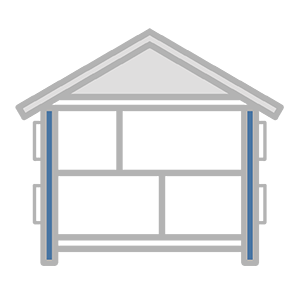
Uninsulated walls conduct heat into your home extremely easily, especially if you’re in full sun.
If you have brick walls, you’ll know how hot those bricks can become when the sun starts to heat them up. This heat is stored in the brick and continues to push itself into your home making it very hot at night and hard to sleep comfortably.
Walls are the “slow burn” culprit. You might not feel it instantly at 2pm — but you’ll feel it later, when the house should be cooling down and instead stays stubbornly warm.
What to do about heat coming in through your walls: Retrofit Wall Insulation can be applied to weatherboard and brick walls. It is pumped in via a hose to ensure it can be filled to the brim for optimum coverage and effectiveness. This insulation creates a protective barrier between the hot outside sun and a cool and liveable interior space.
Common mistake:
Trying to “air con your way out” of hot walls. Cooling works best when you reduce the incoming load first.
Wrap-up
If your home is too hot, you don’t need to throw money at random upgrades. Start with the moves that stop heat at the source:
- Shade the glass
- Seal the leaks
- Fix the ceiling/roof insulation
- Then improve windows, floors, and walls as needed
If you want a broader summer checklist (including heatwave strategy and ventilation timing), jump to: My House Is Too Hot.
Invest in Quality Draught Proofing and Insulation Solutions
Double down on your thermal comfort this by insulating your doors, windows, ceiling, floors, and walls. Not only does an all-home retrofit improve your thermal comfort, but it also lowers your energy cost for the long term as well.
People Also Ask:
⇒ Where can I learn more about this from an industry expert?
A: ecoMaster has been working in the energy efficiency/retrofit arena for over 20 years. During that time, we learned an enormous amount about diagnosing issues, distinctions on various products, as well as developing the best installation practices. We have done the research, so you don't have to. All that information has now been condensed into a series of ecoMasterClasses. Click here to gain access.
⇒ Not sure where to start with making your home more comfortable year-round?
To progress your journey towards an energy-efficient home that loves you all year round. If you need a little ‘push’ to get started… Find the right fix for your home.
⇒ What’s the fastest way to work out why my home is overheating?
A: Do a quick “heat audit”: check which rooms overheat first, whether the heat feels like hot sun through glass (radiant), whether your home stays hot late into the night (roof space/thermal mass), and whether the air con cools the room but it heats up again quickly (air leaks). That tells you what to tackle first.
⇒ What should I fix first if I want the biggest summer comfort win?
A: Start by stopping the sun from hitting the glass (external shade where possible).
What’s Next?
We hope this article has helped you learn how to use simple ways to save on your utility bill. This in turn will help you on your energy and thermal efficiency retrofit journey to make your home more comfortable all year round, and reduce your costs and carbon emissions.
Next, explore Four Reasons Why Using Silicone Sealant is a Draught Proofing Mistake.
If you found this article helpful, then please subscribe to our YouTube Channel. You’ll find many more helpful “How To” videos there. You can also follow us on Facebook and Instagram to stay in the loop. For more great information on how to make your home more energy and thermally efficient, subscribe NOW to ecoBites. ecoBites are free bite-size chunks of the latest energy efficiency information, making it quick and easy for you to absorb.
Recent Comments