


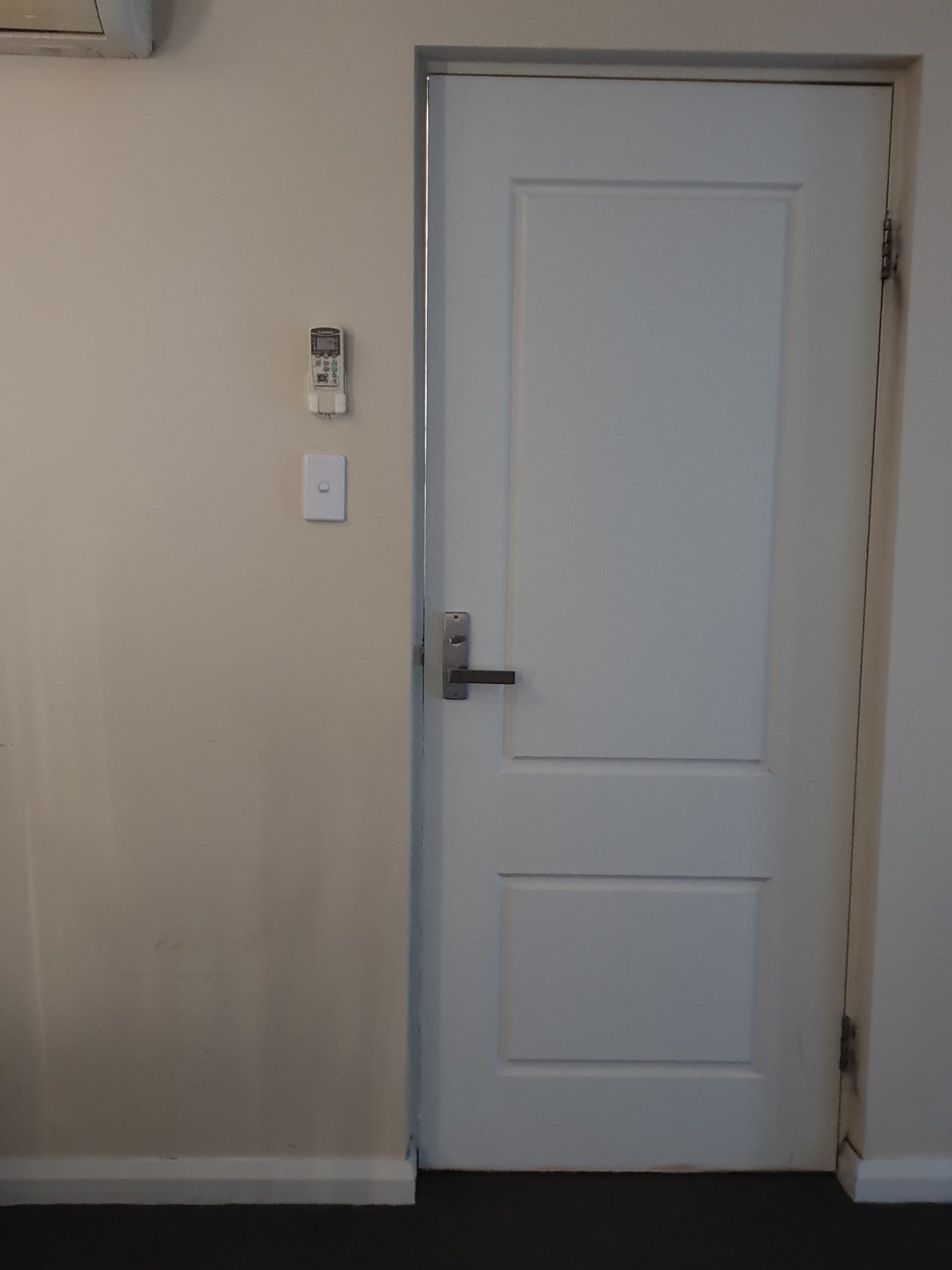
Draughty doors are not just a winter problem. A poorly sealed door can let cold air in during winter, hot air in during summer, and your expensive heating or cooling out through gaps you may not have checked. And the worst offender may not be your front door. It could be the laundry door, back door, internal garage door, cavity slider or French doors quietly letting the weather win.
But draughty doors are not just a winter problem. They are an all-year-round comfort problem.
In winter, a poorly sealed door lets cold air creep in and warm air escape. In summer, it lets hot air push its way inside while your lovely, cool air conditioning slips quietly out through the gaps. So while your heater or air conditioner is doing its very best, one (or more!) forgotten doors may be quietly undoing all that hard work.
Very sad - and very, very expensive!
The front door usually gets blamed first because it is right there looking guilty. It gets the door snake. It gets the sticky foam strip from the hardware shop. It gets glared at every time someone feels a breeze around their ankles. And sometimes the front door deserves it. Front doors can be dreadful little comfort thieves.
But they are not always acting alone.
In many homes, the real culprit is somewhere else entirely. It might be the laundry door down the back of the house, quietly conducting its own weather exchange program. It might be the internal garage door, generously sharing cold, heat, dust and mystery garage air with the rest of the home. It might be the cavity slider that looks closed but is really just making a polite suggestion. Or it might be those beautiful French doors, looking elegant and charming while letting the weather wander in through every available gap.
Doors are very good at pretending they are not the problem. That is part of the problem.
The laundry door is often one of the worst offenders. Laundries are usually tucked away at the back of the house, tiled within an inch of their life, and connected to the outdoors by a door that may not have sealed properly since approximately 1973. You may not spend much time in the laundry, which is fair enough because no one has ever walked into a laundry and thought, “Ah yes, this is where I would like to relax with a cup of tea.” But air does not politely stay in the laundry. It moves. In winter, cold air can sneak in around the door and drift into the rest of the house. In summer, hot air can do exactly the same thing, pushing in from outside while your cooling works harder than it should.
Then there is the back door, which often gets far less attention than the front door because visitors do not see it. Many homes have a lovely front entry and a back door that shuts with all the authority of a wet cardboard box. Unfortunately, your heating and cooling do not care which door looks nicer. If air is leaking around the back door, it still affects the comfort of the home.
And back doors are used more than we realise. Kids go in and out. Pets go in and out. Someone takes out the bins. Someone checks the washing. Someone pops outside “just for a second”, which somehow becomes fifteen minutes and a fully open door. If that door already has gaps around the frame or underneath, the weather does not need much encouragement.
The internal garage door is another sneaky one. Because it is technically inside the house, it often gets ignored. But from a comfort point of view, it can behave very much like an external door. On one side is your home. On the other side is a garage full of temperature drama, old paint tins, mystery screws and spider real estate. If that door is poorly sealed, the garage can become a direct delivery system for whatever weather you were trying to keep out.
Internal doors can also be surprisingly useful when you are trying to keep your home comfortable. Not every useful door leads outside. Sometimes the smartest thing you can do is stop heating or cooling the rooms you are not using. A well-sealed internal door can help you create a more comfortable zone (aka zoning), which is just a fancy way of saying, “Let’s keep the good air where the humans actually are.”
If you have a hallway that turns into an ice tunnel in winter and a heat tunnel in summer, or a back section of the house that never feels right, an internal door may be able to help. But only if it actually seals. If there is a large gap underneath it, or air is flowing around the edges, it is less of a door and more of a decorative suggestion.
Cavity sliding doors are especially good at this trick. They are clever in theory. They save space, tuck neatly into the wall and look tidy. But many of them were designed to divide spaces, not seal them. So if you have a cavity slider between a comfortable room and a not-so-comfortable space, air can still move around it even when it is technically closed. And technically closed is not the same as sealed, as anyone who has ever watched a child close a door will understand.
French doors deserve their own moment because they are both beautiful and deeply suspicious. They bring light, charm and a level of elegance that makes you briefly imagine you are the sort of person who owns linen napkins. They can also leak air from basically everywhere. Around the outside. Along the bottom. Through the centre where the two doors meet. Sometimes through gaps that appear to have been designed by someone who had never personally experienced either winter or summer.
This does not mean French doors are bad. It just means they need a sealing approach that understands they are not one simple door. They are two doors, having a relationship, with all the complexity that implies.
The real problem is that a draughty door is rarely just one neat little gap at the bottom. It is often a collection of small failures working together. A little gap at the top. A bigger gap down one side. A large gap at the bottom corner. A mysterious breeze coming through a spot that makes no architectural sense whatsoever.
That is because real homes move. Doors shift. Frames settle. Hinges sag. Floors are not always level. Old homes have character, which is real estate language for “nothing is straight and good luck.”
This is why cheap, one-size-fits-all door sealing products often fail. They assume your door is square, even and obedient. Your door may be none of those things. Your door may be a rebellious rectangle.
And when a seal is the same thickness all the way around, it can be too thin for the big gaps and too thick for the tight spots. That is how you end up with a door that is still draughty, suddenly hard to close, and decorated with the remains of adhesive foam that has given up on life.
Nobody wants that.
So before you blame the front door again, have a proper look around your home. Pay attention to the doors between comfortable spaces and uncomfortable spaces. Notice the laundry door, the back door, the garage access door, the hallway door, the cavity slider and the French doors. Look for daylight where daylight should not be. Feel for air movement. Notice which rooms never quite warm up in winter or never quite cool down in summer.
And please, for the love of warm socks and affordable air conditioning, do not just shove a door snake in front of it and declare victory. The door snake may be doing its best. But its best may not be good enough.
A better question is not, “What can I stick under this door?” A better question is, “Where is air moving between the uncomfortable part of my home and the comfortable part of my home?”
Once you know that, you can choose the right solution for the actual problem. Some doors need the top and sides sealed. Some need the bottom sealed. Some need all four sides dealt with properly. Some need a special solution because they are French doors, cavity sliders, screen doors, BAL-rated doors, or just wonderfully annoying.
The goal is not to buy a random door seal and hope for the best. The goal is to stop unwanted air movement in the right place, without making the door hard to close, damaging the paintwork, or creating a sticky black goo situation that future-you will deeply resent.
Your front door may be guilty. But before you drag it through the court of household opinion, check the other doors too.
The door letting the weather win may not be the one you think it is. The good news is, once you know which door is causing the problem, you can choose a much better solution.
Start with the door. Check the gaps. Then choose the right seal for the job.
Your heater will thank you. Your air conditioner will thank you. Your socks will thank you.
And your door snake, bless it, can finally retire with dignity.
So which door is it? Or are there more than one in your home?
Not sure which door is letting the weather win? Start with our Choose the Right Solution for Your Draughty Door guide. It will help you find the problem door, check the gaps, and choose the right seal before you buy the wrong thing.
People Also Ask:
⇒ Where can I learn more about this from an industry expert?
ecoMaster has been working in the energy efficiency / retrofit arena for over 20 years. During that time we learnt an enormous amount about diagnosing issues, distinctions on various products as well as developing the best installation practices. We have done the research, so you don't have to. All that information has now been condensed into a series of ecoMasterClasses. u003ca href=u0022http://www.ecomaster.com.au/ecoMasterclassu0022u003e Click here to gain access.u003c/au003e u003cbru003e
⇒ u003cstrongu003eAre draughty doors only a winter problem?u003c/strongu003e
No. Draughty doors are an all-year-round comfort problem. In winter, they can let cold air in and warm air out. In summer, they can let hot air in and cooled air out. Either way, your heating or cooling has to work harder than it should.u003cbru003e
⇒ u003cstrongu003eWhich doors should I check for draughts?u003c/strongu003e
The front door is the obvious place to start, but it is not always the worst offender. Check any door between a comfortable part of your home and a colder, hotter, dustier or noisier space. Laundry doors, back doors, internal garage doors, hallway doors, cavity sliders and French doors are all worth checking.u003cbru003e
⇒ u003cstrongu003eIs a door snake enough to stop draughts?u003c/strongu003e
A door snake can help with air movement under the bottom of a door, but it does not seal the top, sides or corners. If air is coming in around the frame, through the centre of French doors, or from a garage, laundry or hallway, a door snake will only deal with part of the problem.u003cbru003e
⇒ u003cstrongu003eWhy do cheap sticky door seals often fail?u003c/strongu003e
Many cheap sticky seals assume your door gap is even all the way around. Real doors are rarely that well behaved. If the seal is thick enough for the biggest gap, it may be too thick for the tighter areas, making the door hard to close. Over time, it can squash, peel off or leave sticky residue behind.u003cbru003e
⇒ u003cstrongu003eHow do I know which door seal to buy?u003c/strongu003e
Start by identifying the type of door and measuring the gaps around it. Check the top, sides and bottom separately because the gaps may not be even. Once you know whether you are dealing with a front door, back door, internal door, French door, cavity slider or screen/security door, it is much easier to choose the right solution. u003ca href=u0022https://ecomasterstore.com.au/pages/choose-the-right-solution-for-your-draughty-dooru0022u003eClick hereu003c/au003e u003cbru003e
What’s Next?
We hope this article has helped you look beyond the obvious front door and find the sneaky doors that may be letting the weather win. A draughty door is not just a winter nuisance. It can affect your comfort all year round by letting cold air in, hot air in, and your carefully heated or cooled air out.
Next, explore How to Measure Your Door Gaps Before Buying a Door Seal.
If you found this article helpful, then please subscribe to our YouTube Channel. You’ll find many more helpful “How To” videos there. You can also follow us on Facebook and Instagram to stay in the loop. For more great information on how to make your home more energy and thermally efficient subscribe NOW to ecoBites. ecoBites are free bite size chunks of the latest energy efficiency information making it quick and easy for you to absorb.

Find the door that’s letting the weather win,
then seal it properly.
Recent Comments